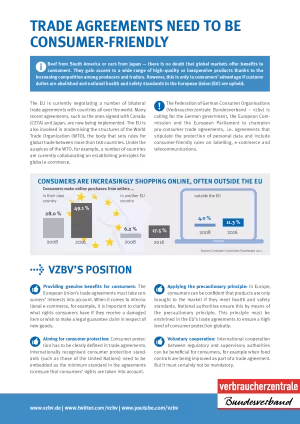

Global markets – and the competition they foster – can bring consumers clear advantages: greater product variety at affordable prices.
At the same time, they confront consumers and policymakers with tough questions: How safe are goods purchased from outside the EU, and who enforces those standards? Can I trust non‑EU providers to protect my data? What are the consequences of global supply chains for people and the environment?
EU trade policy sits at the heart of this tension. On the one hand, it should help translate the benefits of fair competition into real gains for consumers. On the other, global markets must never be treated as an end in themselves.
From a consumer‑protection standpoint, the European Union should therefore use trade agreements to advance the values it professes – upholding high levels of consumer protection, strong labour rights, and robust environmental safeguards. In doing so, the EU can position itself as a pioneer of values‑based trade and a staunch supporter of multilateral institutions.
vzbv calls for:
- Tangible consumer benefits from trade agreements, e.g. in cross‑border e‑commerce and telecommunications.
- Voluntary, structured regulatory cooperation between competent authorities to be anchored in trade agreements.
- Digital trade must uphold European fundamental rights, including data protection and rules governing algorithmic systems. Trade agreements – whether bilateral or within the WTO – must not curtail the ability of EU or national legislators to protect consumers.
- The European precautionary principle must be firmly embedded in trade agreements.
- Consumer organisations must be involved early and effectively in dialogue and cooperation fora where EU trade policy is negotiated – including the transparent publication of negotiation outcomes and timely access to documents.